Enterprise AI convergence
A single point of policy, monitoring, governance, and visibility for AI interactions across a messy enterprise: manufacturing, office work, security, engineering, and shadow AI.
This page reads like a book because the work is connected: secure systems, accountable AI, operational tooling, game worlds, old-computer lessons, and a future where software increasingly controls physical reality.
My professional center is cybersecurity, cloud, AI security, secure architecture, and systems that make risk visible enough to do something about it. I am not interested in checkbox theater. If it does not reduce real risk or help real people operate safely, it is not done.
Cybersecurity & AI
Security must be built into the system, not sprayed on top after the demo works. No fake production claims. No demo defaults pretending to be customer-ready. No dumping risk onto users because the builder got bored before the hardening work.
The useful version of security is practical: identity, logging, least privilege, detection, response, secure defaults, supportability, threat modeling, remediation, and documentation honest enough that a customer can trust it.
Cybersecurity & AI
I build and think about AI systems, prompt injection, model behavior, AI tool intake, enterprise monitoring, SecOps search, classifiers, governance, and safe adoption in large organizations.
AI should be a tool, not a boss, judge, cop, priest, replacement conscience, or hidden policy engine. If a human life, job, freedom, reputation, safety, or future is affected, humans remain responsible.
Security
Security work starts with the shape of the system: identity, trust boundaries, data paths, logging, failure modes, and the parts attackers will touch first. A useful architecture makes those things explicit before production pressure turns them into folklore.
AI Systems
Enterprise AI needs policy, monitoring, intake, review, and accountability in one place. The goal is not to block useful work. The goal is to keep hidden AI behavior from turning into hidden policy.
The durable pattern is a control plane: approved tools, model-use visibility, risk tiers, logging, review paths, and human accountability where consequences matter.
AI Systems
Prompt injection is a systems problem. The model sees text, tools, memory, and user intent inside one context window, so the application has to decide which instructions deserve authority.
The goal is simple: explain AI in a way that is useful, not mystical, and not buried under vendor fog.
AI explainer
Modern AI systems are pattern engines trained on enormous amounts of examples. A language model does not “know” things the way a person knows them. It predicts useful next tokens based on patterns it learned during training, then follows the instructions and context it is given at runtime.
The practical version: a user asks a question, the system builds a prompt, the model generates a response, and surrounding controls decide what tools it can use, what data it can see, what policies it must obey, and what should be blocked or logged.
The blunt truth: AI quality is not just “which model did you pick?” It is the whole system around it: data, instructions, retrieval, tools, evaluation, security, and accountability.
AI explainer
A golden set is a small, carefully curated, human-validated evaluation dataset used as the trusted answer key for an AI system. It is the “we know what right looks like” set.
Think of it like this: here are the examples we absolutely know the correct behavior for. If the AI cannot do well on this, we do not trust it yet.
I would split golden sets into several lanes: prompt injection, benign security Q&A, malicious cyber intent, ambiguous intent, false positives, and enterprise policy behavior.
The golden set becomes the regression test suite. Every time the prompt, model, RAG pipeline, classifier, policy, or tool access changes, the golden set tells you whether the system got better, worse, or quietly broke something important.
AI explainer
A standard model is a general-purpose model trained to handle a broad range of tasks. It is useful out of the box, but it does not automatically understand your company, your tone, your workflows, your risk tolerance, or your exact definitions of good and bad behavior.
A custom-tuned model has been adapted for a narrower purpose. That might mean it speaks in your preferred format, recognizes your categories, follows your escalation rules, or performs better on a specific domain such as AI security, SecOps triage, code review, policy mapping, or prompt-injection detection.
The honest answer is that tuning is not always the first move. Sometimes a strong base model plus good system prompts, RAG, tool design, and golden-set evaluation is better than rushing into fine-tuning with messy data.
AI explainer
Tuning uses examples. Not vibes. Not wishes. Examples. The model needs to see the kind of input it will receive and the kind of output you want it to produce.
You should not train on your final exam. Keep your golden set separate. If the model sees the exact answers during training, the score becomes theater. It looks smart because you leaked the test.
For security work, the data should include boring normal cases too. A model that screams “malicious” at every security question is not safe. It is just useless with confidence.
AI explainer
The AI world is full of file formats, serving layers, tuning methods, and retrieval tricks. The names sound worse than they are. Here is the useful map.
A common model file format used heavily with llama.cpp and local inference tools. It is popular for quantized models that can run on consumer hardware.
A safer model weight format often used in the Hugging Face ecosystem. It avoids some risks of older pickle-based formats.
Retrieval-Augmented Generation. Instead of expecting the model to remember everything, the system retrieves relevant documents and gives them to the model as context.
Supervised Fine-Tuning. Training a model on curated input/output examples so it learns a desired task, style, structure, or behavior.
Parameter-efficient tuning methods. They adapt a model without retraining every weight, making tuning cheaper and more practical.
A numerical representation of text, code, images, or other data. Embeddings help search systems find meaning, not just matching words.
A database optimized for similarity search over embeddings. Often used in RAG pipelines.
Compressing model weights to use less memory and run faster, usually with some quality tradeoff.
For a practical system, these pieces work together: documents become embeddings, embeddings go into a vector store, RAG retrieves the right chunks, the prompt tells the model what to do with them, and the golden set tells you whether the whole contraption actually works.
Cybersecurity & AI
A single point of policy, monitoring, governance, and visibility for AI interactions across a messy enterprise: manufacturing, office work, security, engineering, and shadow AI.
Classifying plain-language tricks, math-shaped instructions, fake grandma stories, roleplay bypasses, data-exfil attempts, and the soft manipulations that models mistake for context.
Indexing cyber and AI-security knowledge, code repositories, exploit data, advisories, authorized research, and internal context so defenders can find signal faster.
AWS, Linux, Go, IAM, monitoring, architecture, hardening, evidence, and secure systems people can actually operate after launch day.
Finding stubs, placeholders, fake readiness claims, demo secrets, missing controls, brittle paths, and trust gaps before customers or attackers do.
Controls that reduce risk without punishing users into bypassing them. Security that protects the mission instead of becoming the mission.
This is where the experiments live: serious security and infrastructure ideas, the Architecture Canon, music and audio tooling, old-machine lessons, game systems, desktop tools like MarkForge, and strange creative machines that probably should not exist but absolutely do.
Architecture
The Architecture Canon is the governed knowledge base behind the architecture writing: laws, patterns, concepts, proof points, diagrams, references, and publication projections generated from one source of truth.
The public website is generated from the Canon graph. It is meant to be browsed like a technical reference, not read as a marketing page.
Open the Architecture Canon · Search the Canon · Browse relationships
Product
MarkForge is a cross-platform desktop Markdown editor with first-class Mermaid diagram support — Monaco editing, live preview, Mermaid Studio, workspaces, export to HTML/PDF/DOCX/slides, and a command palette for every action.
Windows and Linux builds are available now; macOS is on the way. The product site hosts downloads, screenshots, and the in-app update manifest.
MarkForge on rickcollette.org · markforge.rickcollette.org · github.com/rickcollette/markforge
Infrastructure
Capper is a self-hosted, multi-tenant cloud control plane that ships as a single Go binary. It pulls compute, networking, storage, identity, serverless functions, and observability under one roof — so you can run your own small cloud without standing up a dozen services first.
Workloads run as .cap capsules on top of Bubblewrap, chroot, crun, or runc, so isolation stays close to the metal instead of hidden behind a heavy platform. Multi-tenancy is real — organizations, accounts, projects, and IAM — and everything is reachable four consistent ways: a CLI, a REST API, a Go SDK, and the CapperWeb UI.
It handles the boring-but-critical parts too: VPC-style virtual networking with public IPs, object storage and block volumes, Lambda-style functions, audit and observability, and automatic TLS via ACME / Let's Encrypt. A capper-agent daemon manages the fleet. State lives in embedded SQLite by default, with an optional networked CapDB backend when you outgrow a single node.
github.com/rickcollette/Capper · CapperOS.org · CapperVM.com
Infrastructure
Good infrastructure tools remove repeat pain without creating a giant new platform to babysit. The best ones are boring in the right places: clear inputs, predictable output, useful errors, and no mystery state.
The common rule is simple: build the thing, make it understandable, make it useful, and leave the door open for weirdness.
Data
CapDB is networked SQL — pooled, secured, and replication-ready. It is a standalone SQL engine forked from SQLite3 that keeps the parts people love about SQLite (standard SQL, portable single-file databases, embeddability) and adds the production stack you usually have to bolt on later.
You can use it locally through the capdb shell or the embedded libcapdb library, or talk to it remotely over TLS with the capdb:// protocol. Built-in connection pooling with sane WAL defaults, a high-availability volume store, and primary/replica WAL-segment streaming mean the same engine scales from a desktop file to a replicated server.
Security is part of the design, not an afterthought: TLS transport, path jails, and generation fencing keep a networked database from becoming an open door. CapDB is also the optional networked backend for Capper, so the two projects share one data story.
Systems
Some tools exist because the normal workflow has too much friction. Some exist because constraints still teach better engineering. Some exist because a game world, audio idea, or community practice needs a little machinery behind it.
Band projects, songwriting, audio software, live performance ideas, vocal chains, and tools for moving from idea to performance without drowning in friction.
Maps, rules, economies, factions, stories, tools, communities, and the strange magic that happens when people inhabit a world together.
Martial arts, mentoring, practical education, and local systems for helping people grow stronger without becoming worse.
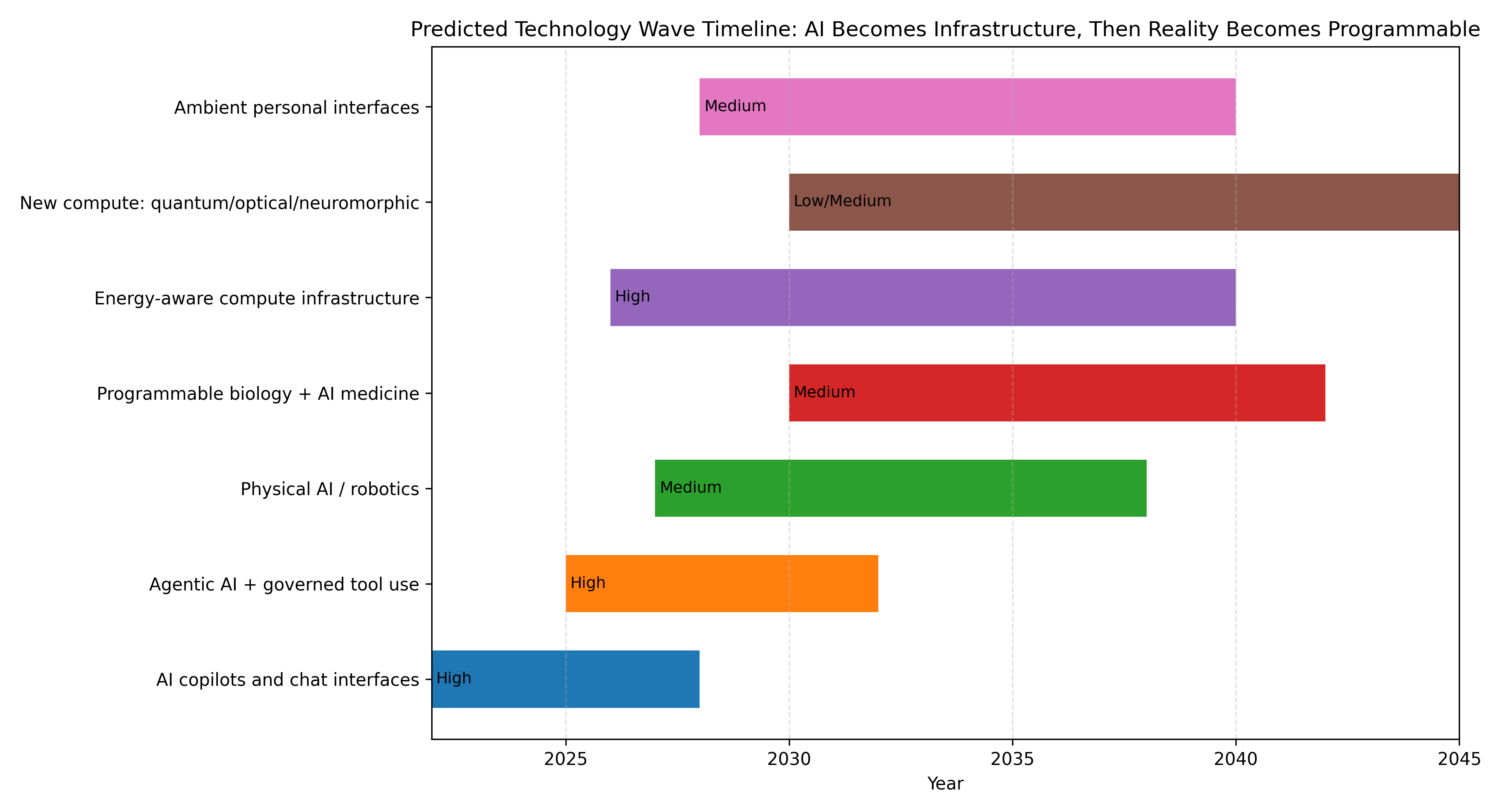
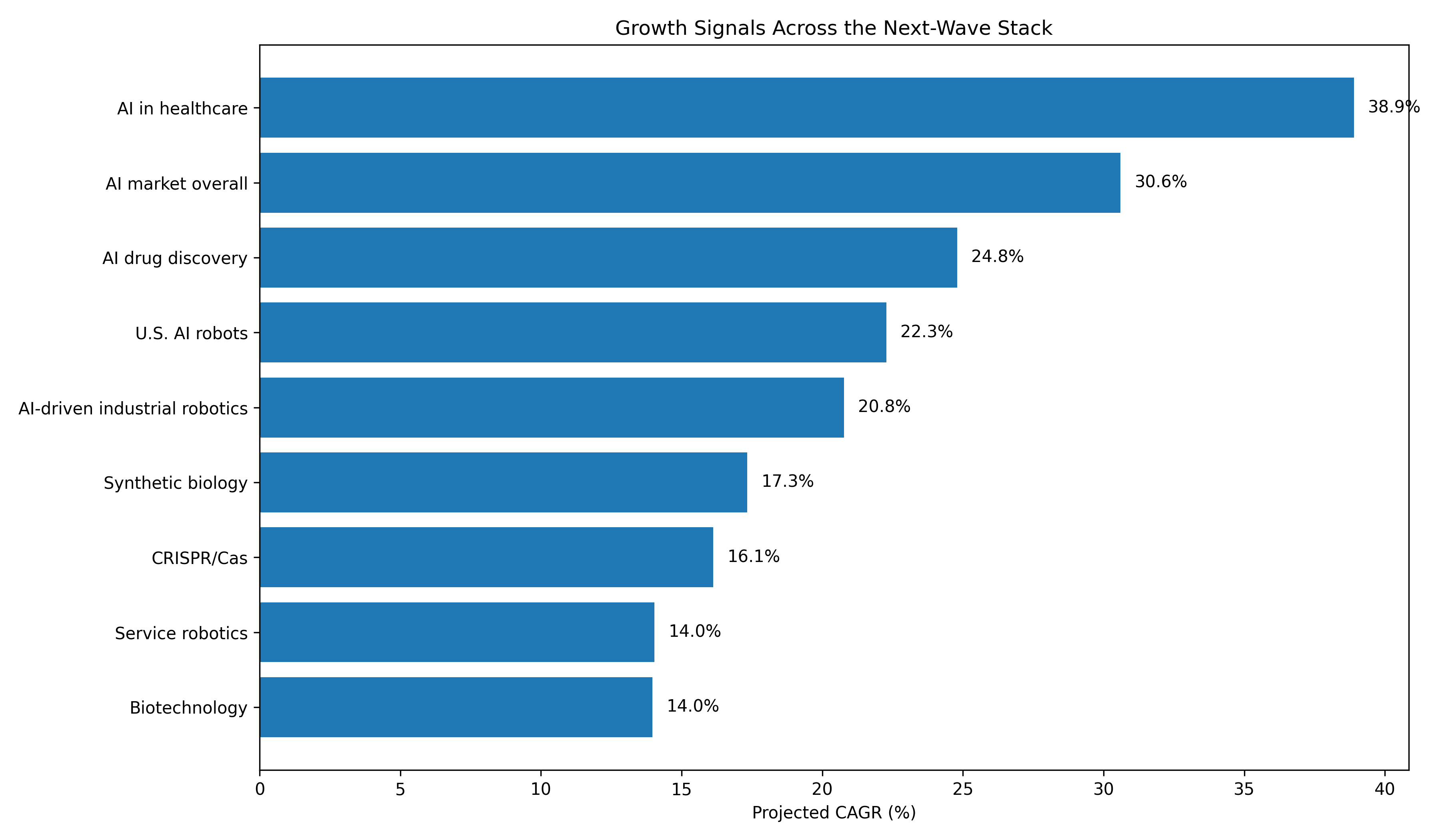
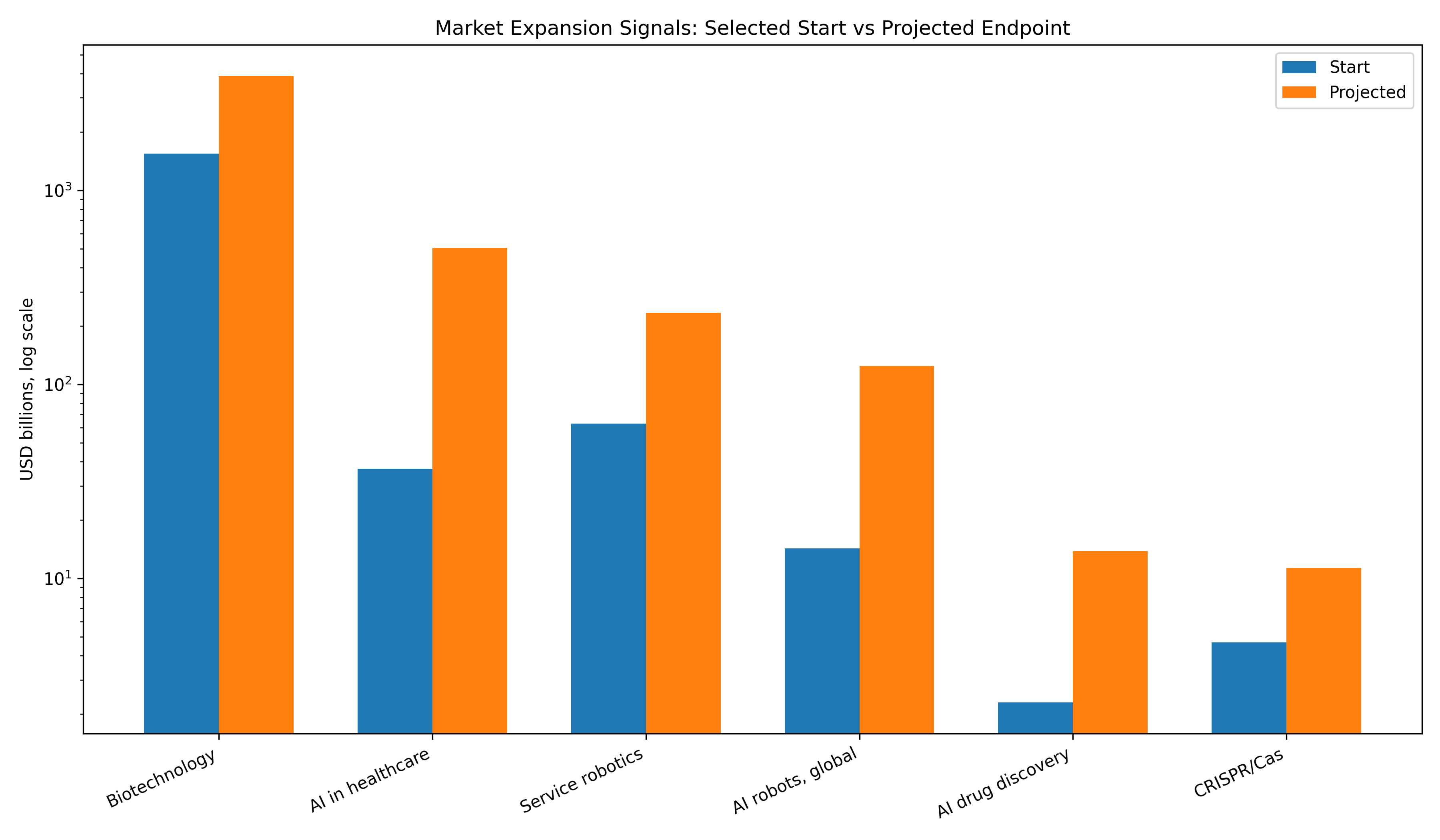
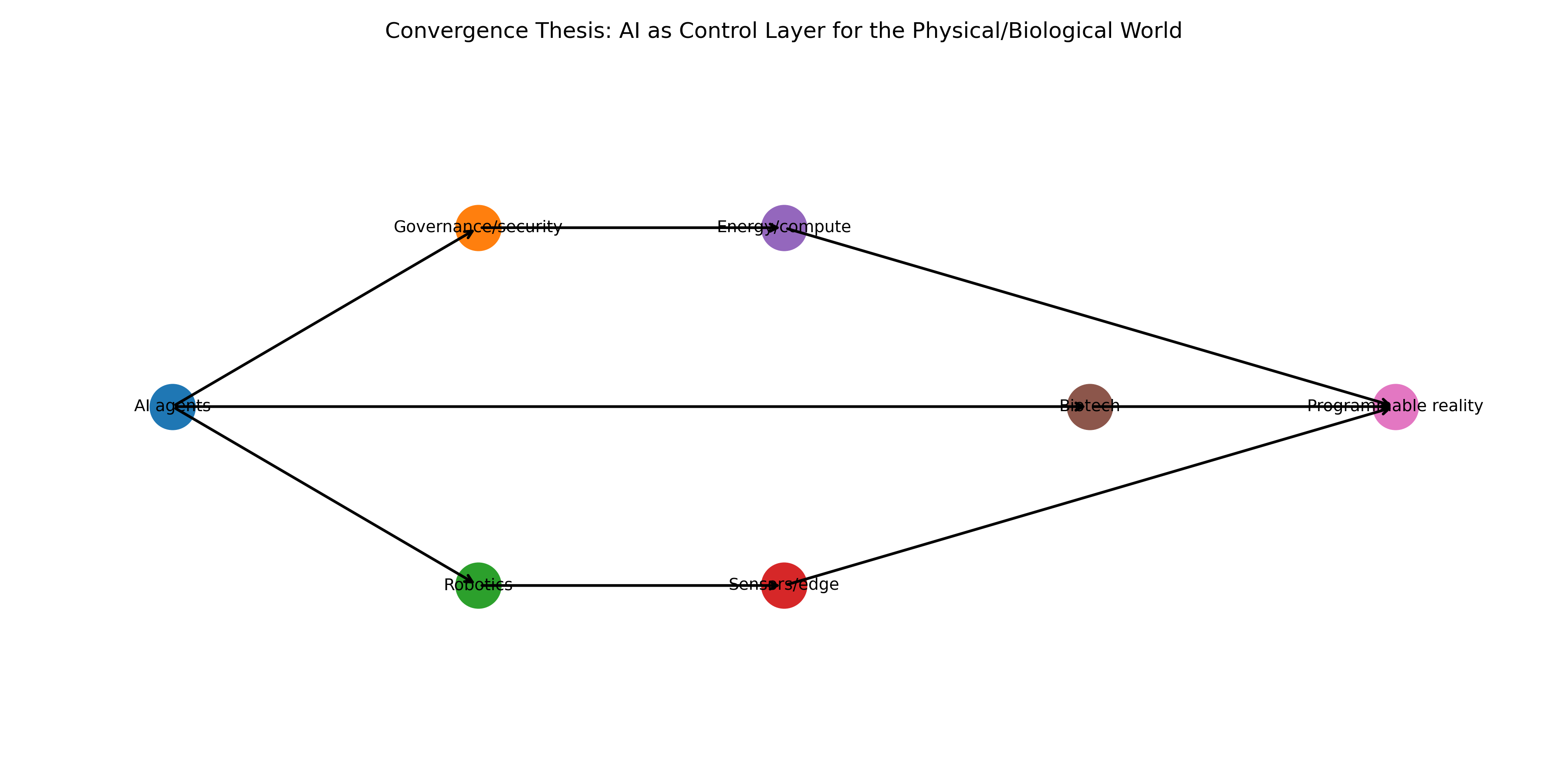
The next wave is not just better chat. AI becomes infrastructure first, then moves into physical systems, then starts shaping the design and operation of material systems: machines, factories, medicine, biology, energy, and interfaces.
Future Tech
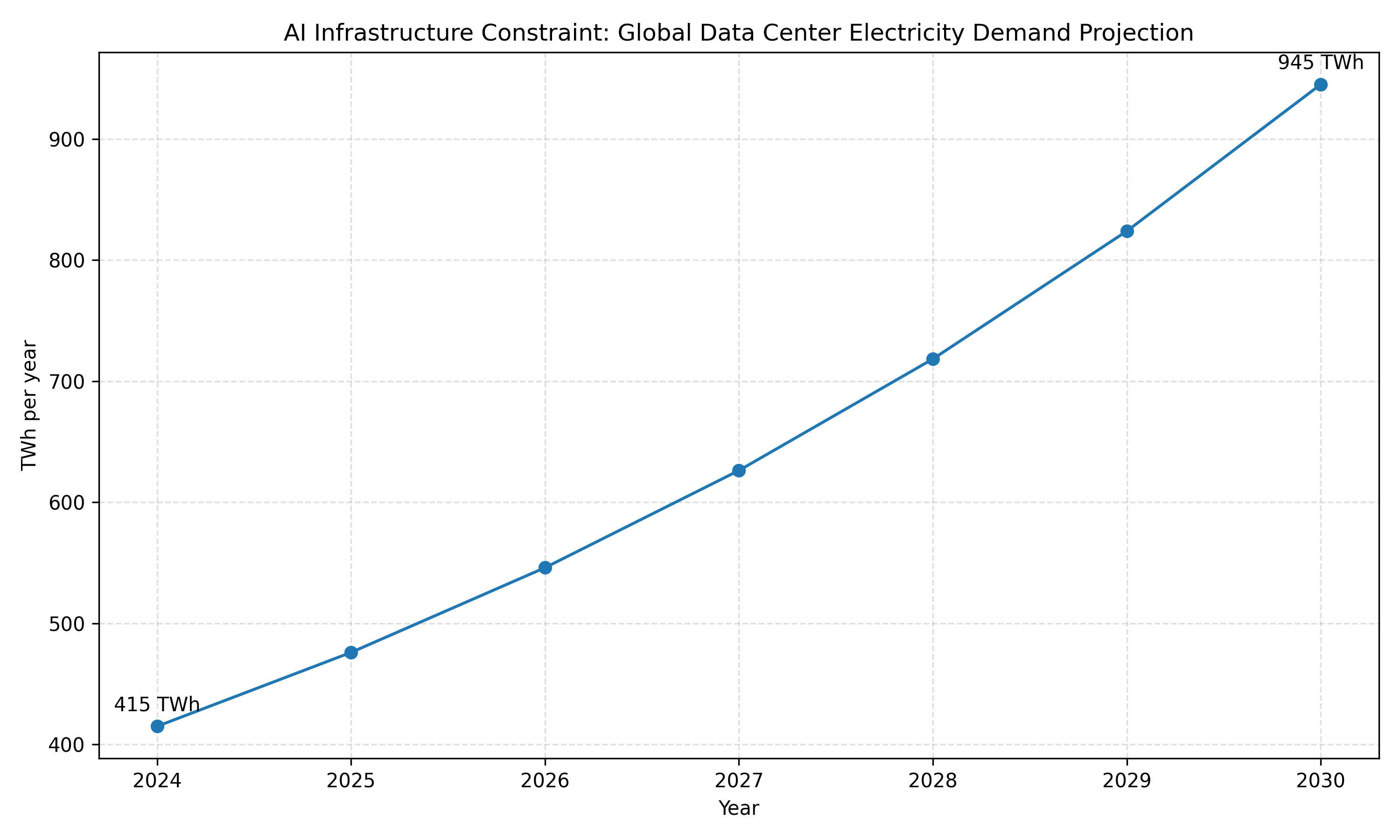
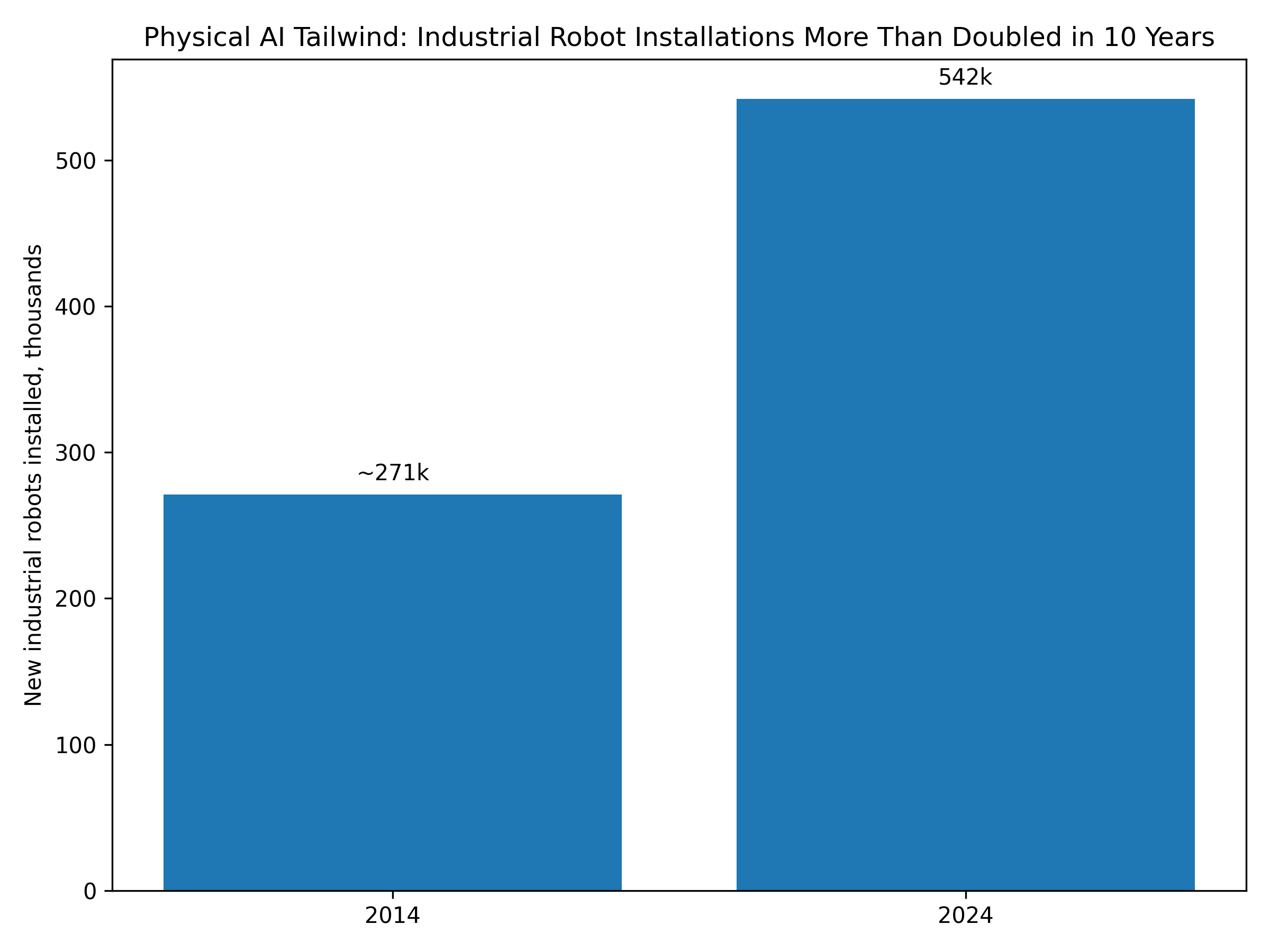
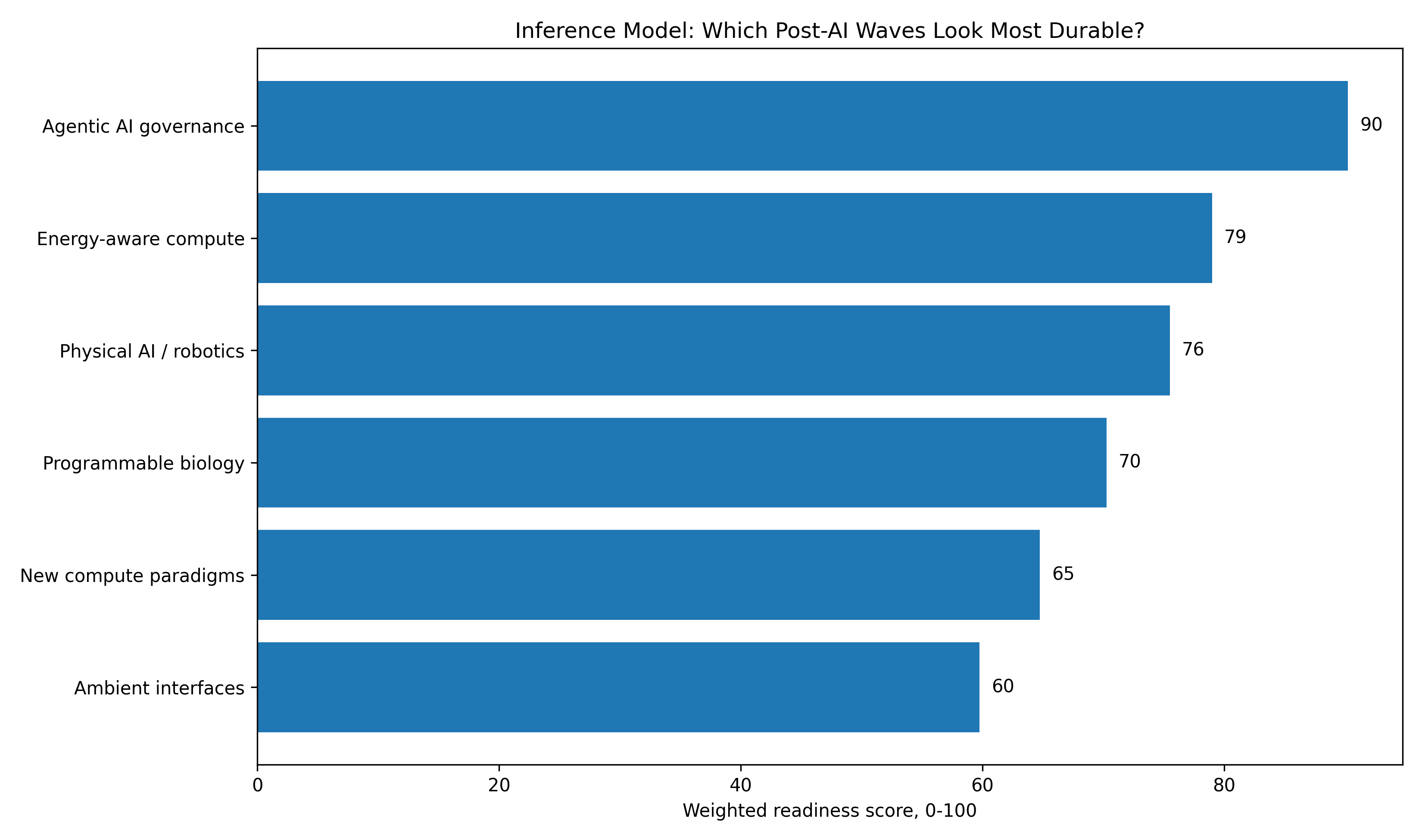
Agentic AI and governed tool use become the control plane. Physical AI makes automation visible. Programmable biology and new compute widen the blast radius.
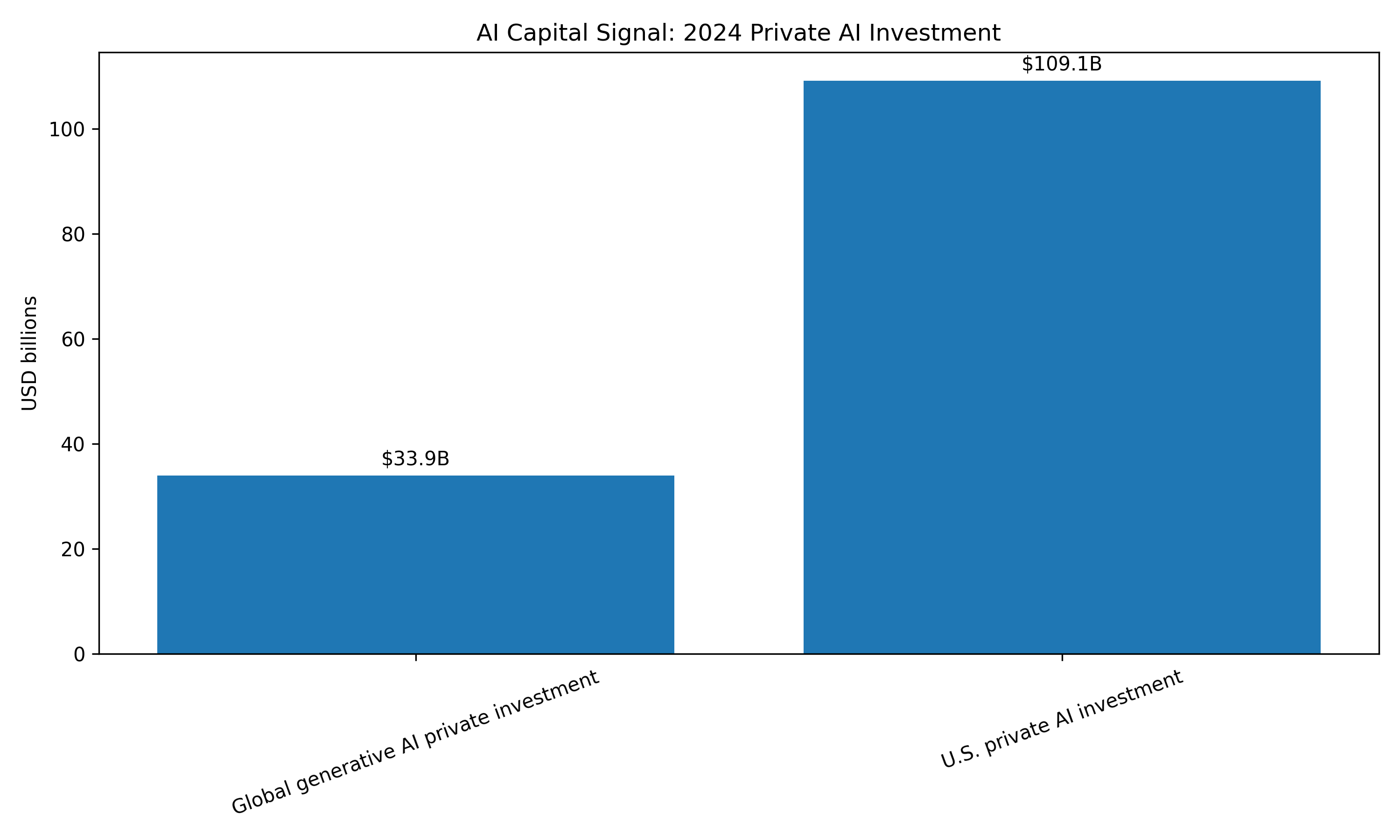
The readiness score below is a heuristic discussion model, not a prediction engine. It weights growth, capital, infrastructure pull, governance pull, and platform breadth.
Future Tech
These visualizations summarize the timing, readiness, and convergence patterns behind the thesis.
Loading timeline...
Loading readiness model...
Loading convergence map...
Future Tech
The complete underlying datasets are included below so the thesis can be inspected instead of only summarized.
Future Tech
The full chart set is included here for a more visual read of the same evidence.
Future Tech
This explains how the evidence and readiness model are framed.